
Milton and his first wife
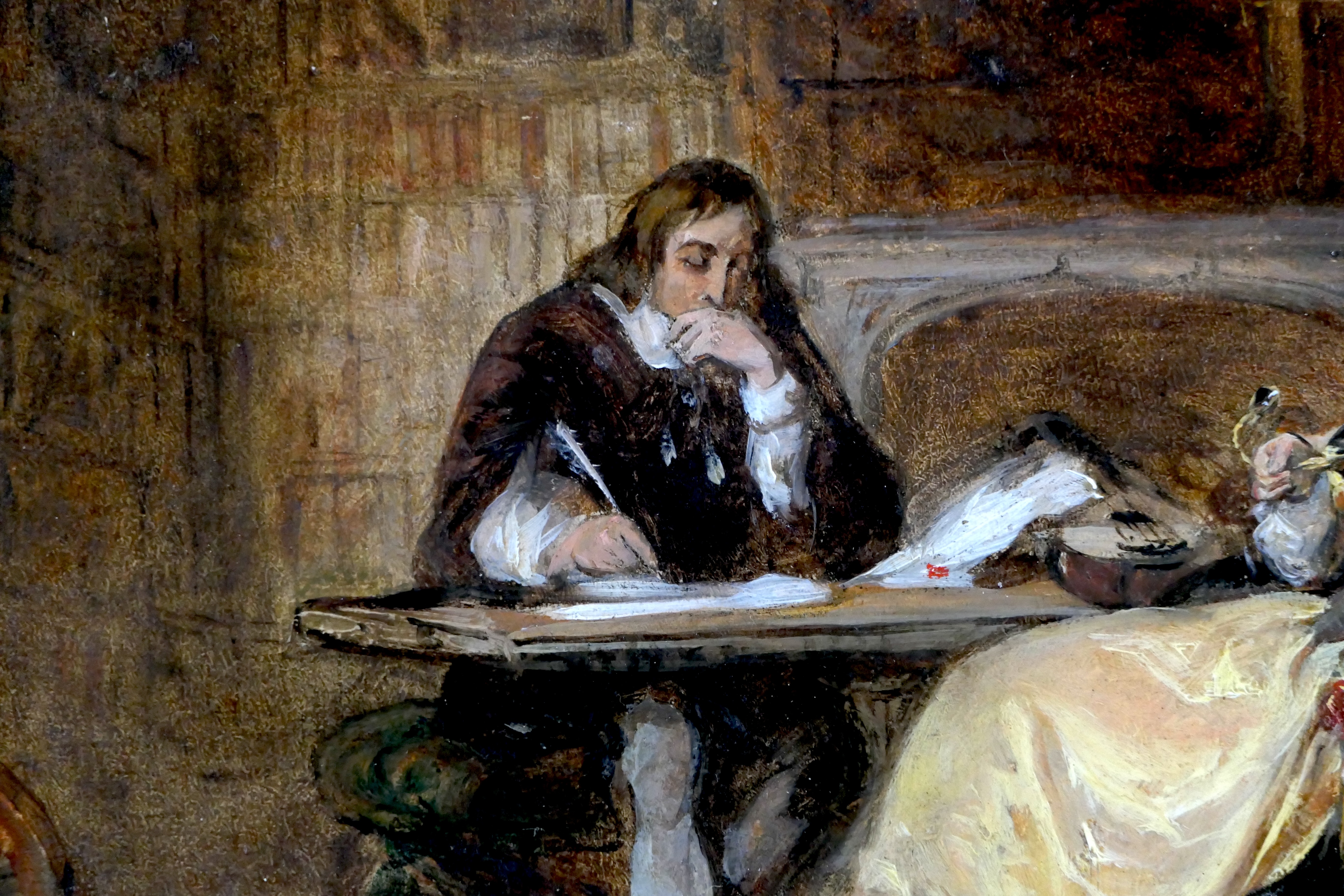

Milton and his first wife
William Powell Frith
1209
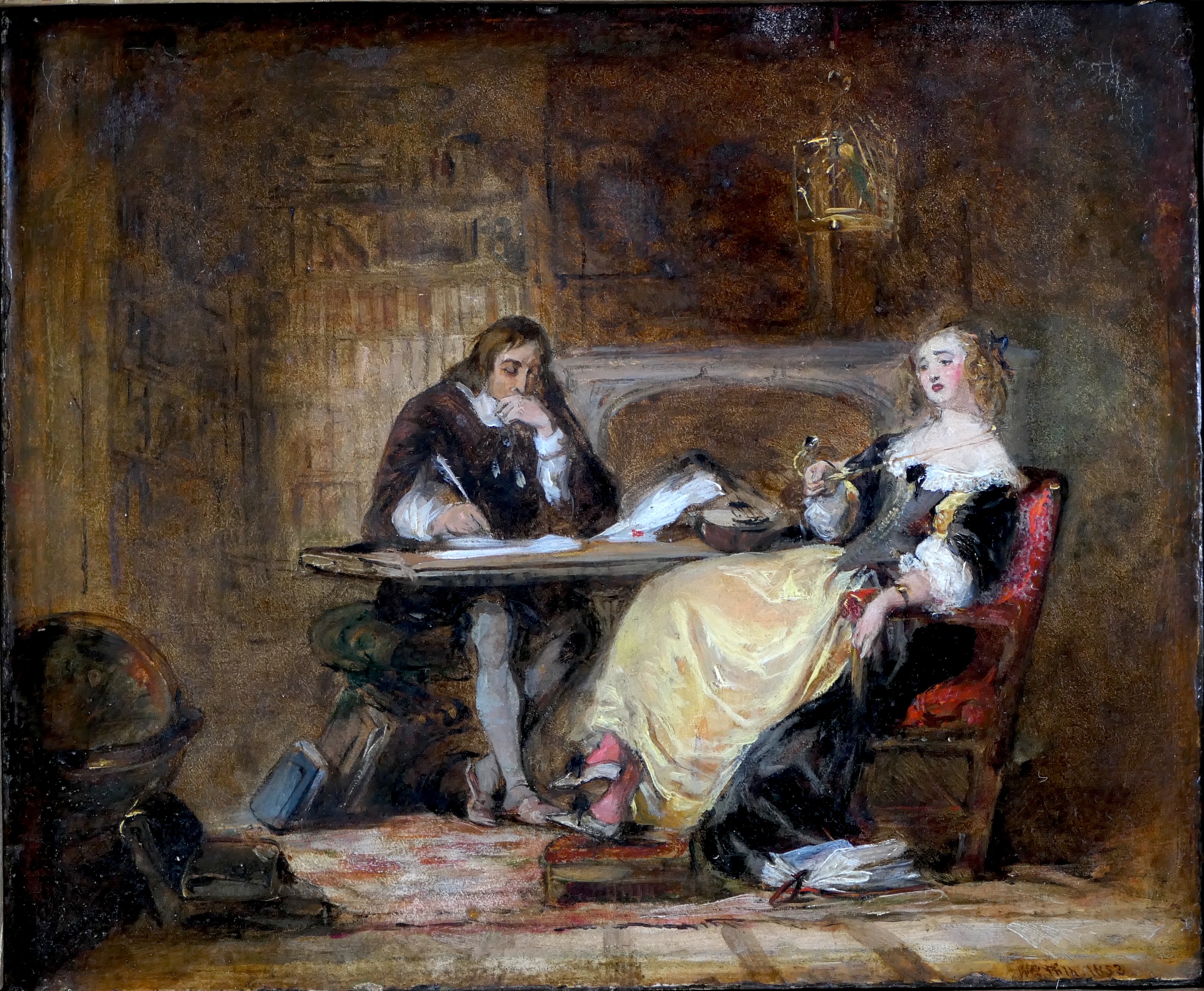
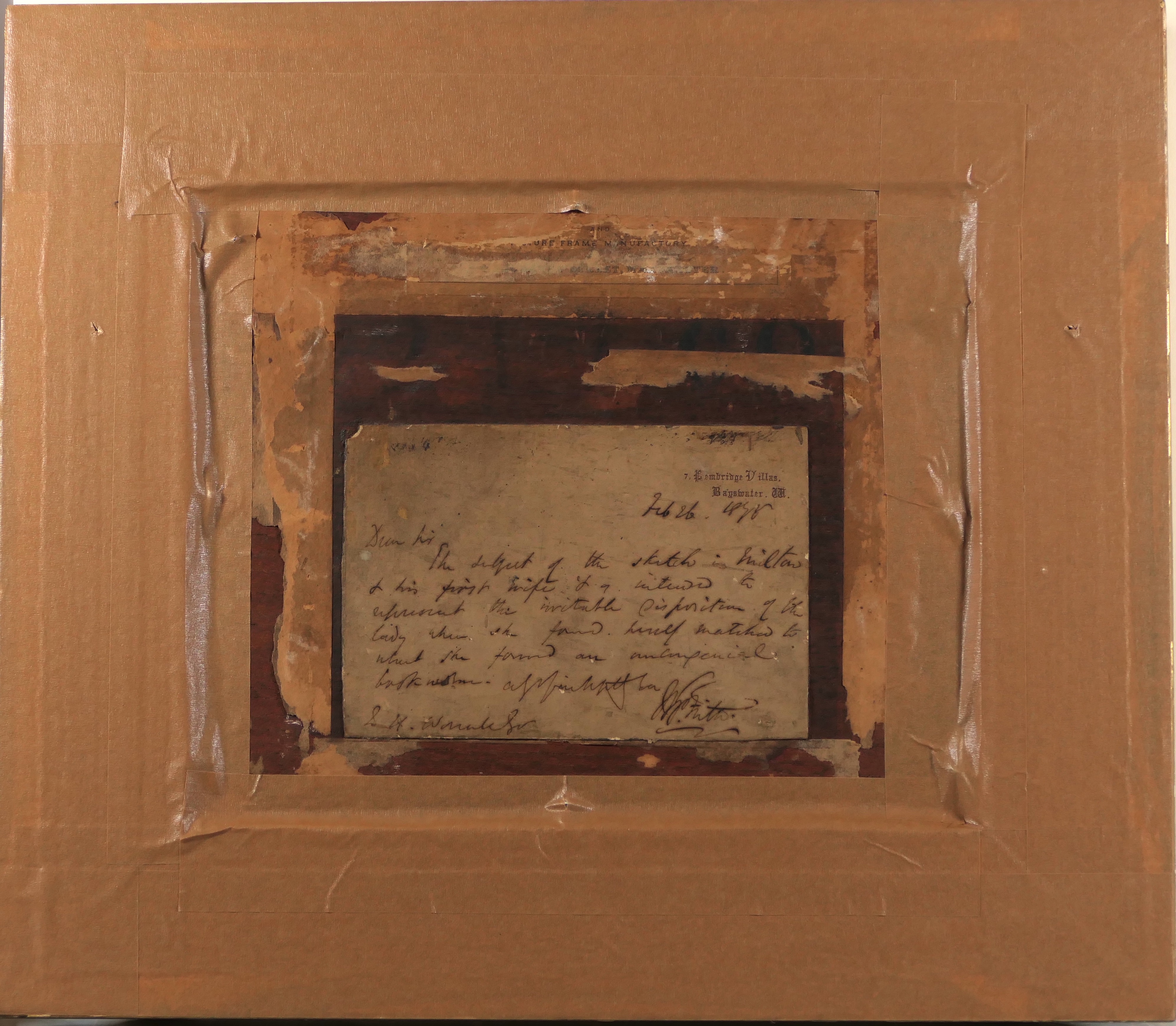
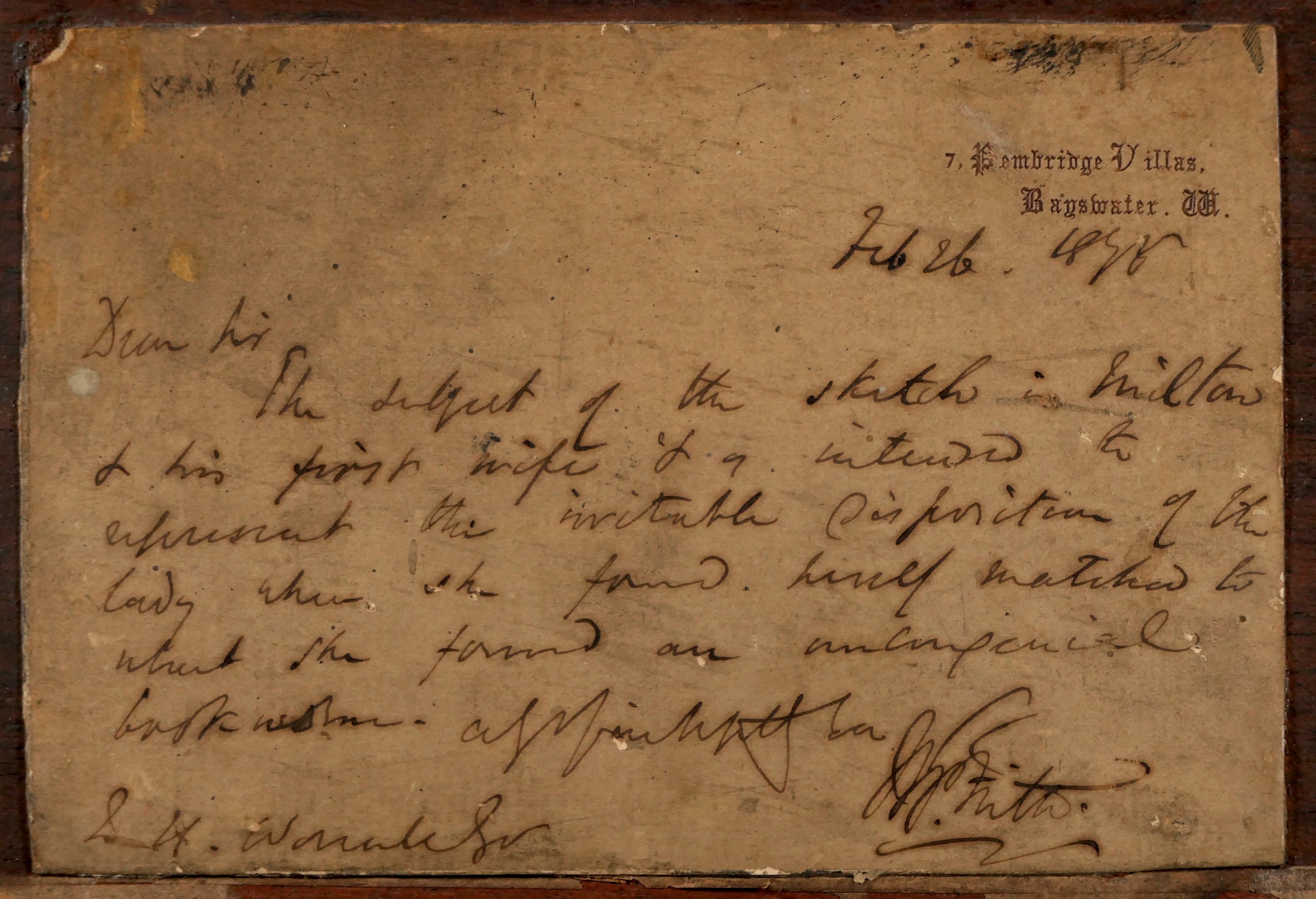
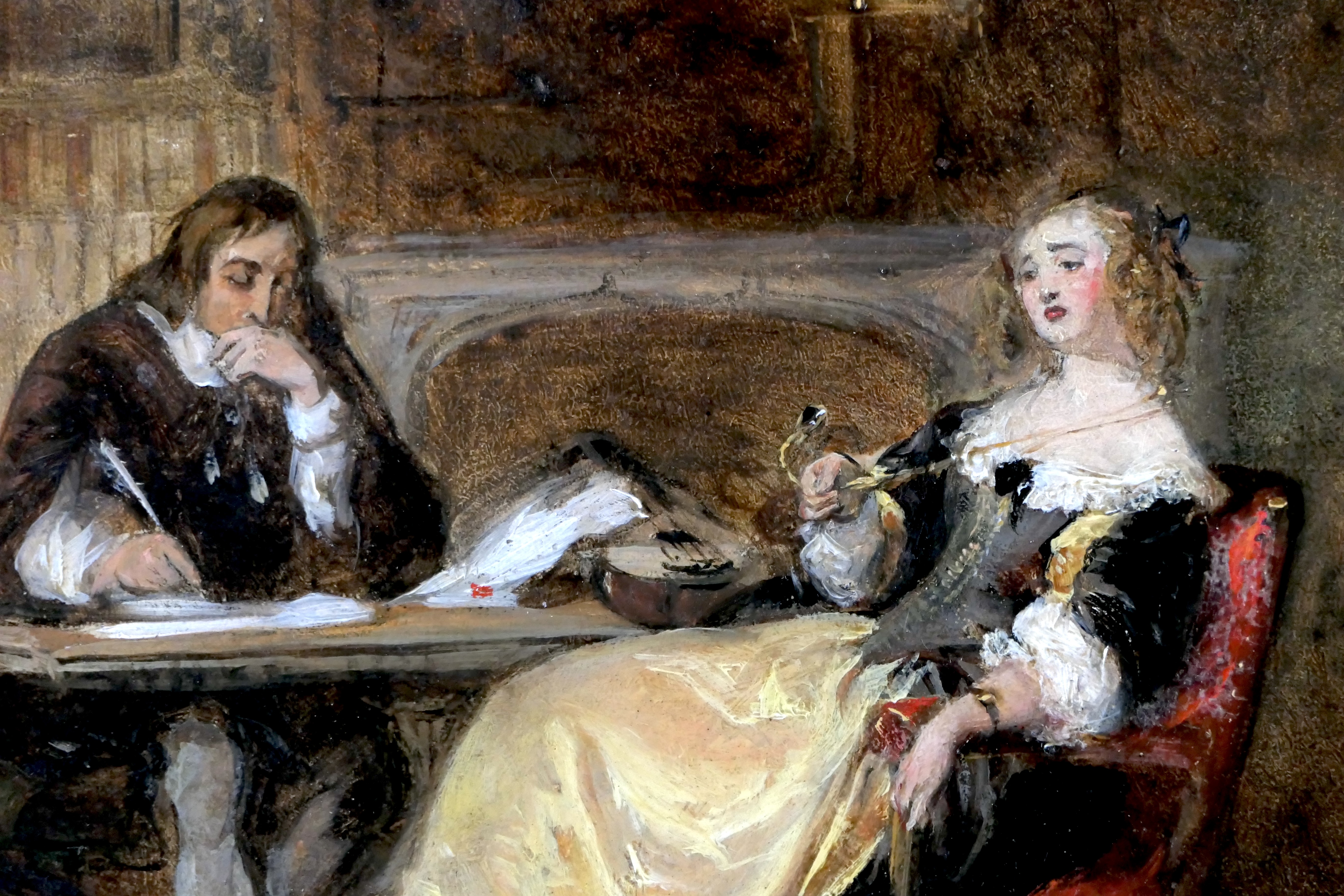
In this jewel-like panel painting, Frith tells us a story that reflects the turbulent history of 17th century England. On the face of it we might think that the letter Frith wrote to the then owner of the painting in 1898, 45 years after he painted the work, and which is attached to the back of the panel, tells the whole story: 'Dear Sir, The subject of the sketch is Milton & his first wife & is intended to represent the irritable disposition of the lady when she found herself matched to what she found an uncongenial bookworm. Faithfully Yours W. P Frith'.
However, this small panel encapsulates the political and religious turbulence of the age. In the 1840s Frith painted a number of literary subjects, based on works by Shakespeare, Sir Walter Scott and Charles Dickens, for example, and this work may be seen as transitional to his later work, much of it of a moralising tone. John Milton (1608-74) was not only once of the greatest British poets, author of 'Paradise Lost' and 'Paradise Regained', but also a civil servant, a republican and Secretary for Foreign Tongues to the Commonwealth Council of State under Oliver Cromwell. His views developed from extensive reading, travel and experience beginning as a student at Cambridge in the 1620s and continued through the English Civil War (1642-1651).
In 1642 Milton married Mary Powell, 17 years his junior, and from a strong royalist family. Within weeks Mary had returned to live with her family in Oxfordshire. Although the reason for the split was not recorded, it was no doubt not unconnected with the outbreak of the Civil War. Milton sought a divorce, unsuccessfully, but his research into the subject led to a series of writings of polemic arguing for the legalisation of divorce. Despite his continued campaigning, John and Mary reunited in about 1645, and went on to have four children together, before Mary died in childbirth in 1652, aged 27, while her husband's blindness was setting in. Frith's painting thus portrays a complex, initially problematic and ultimately tragic marriage, but also touches on some of the major political, societal and religious issues of the mid-17th century.
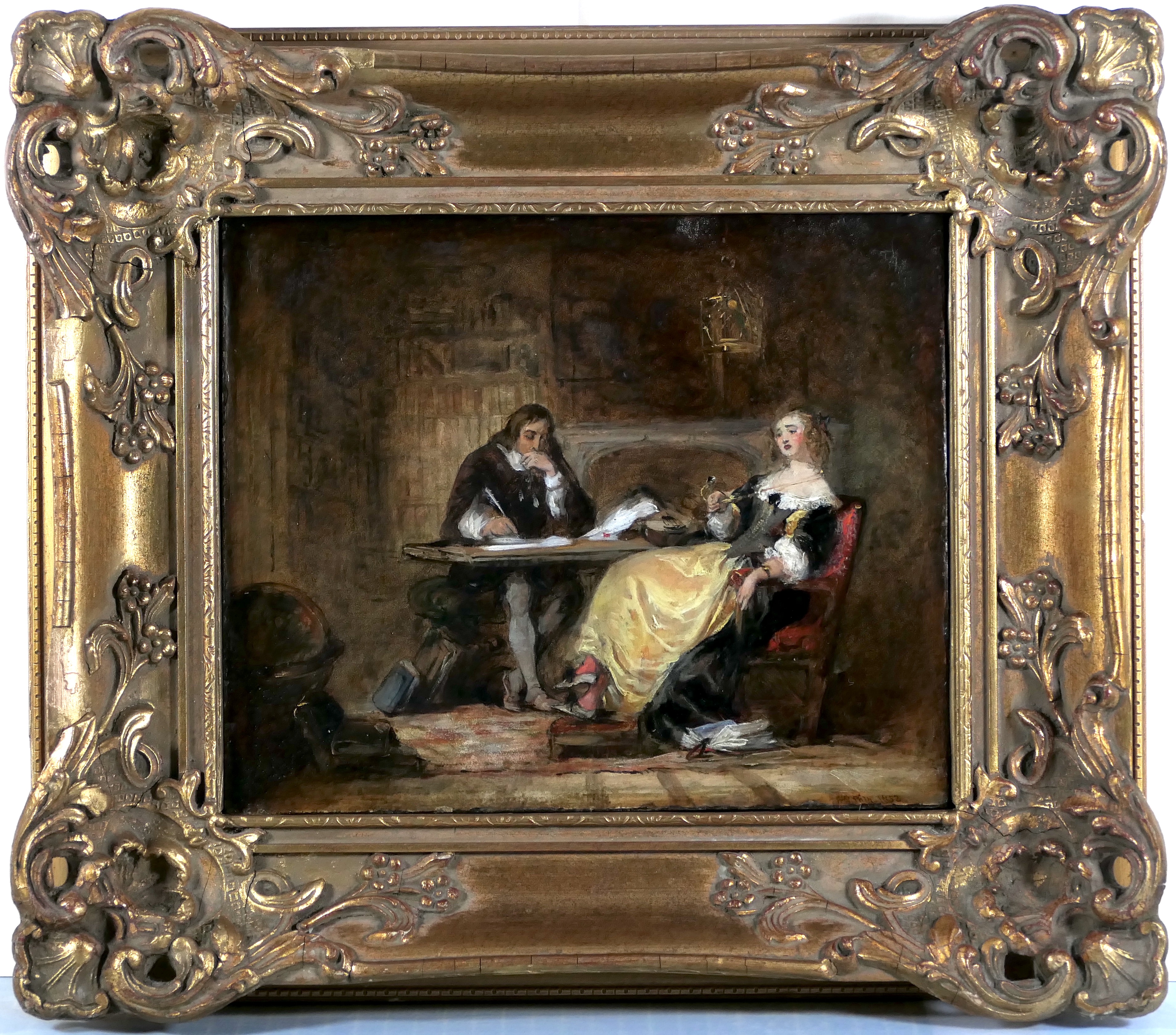
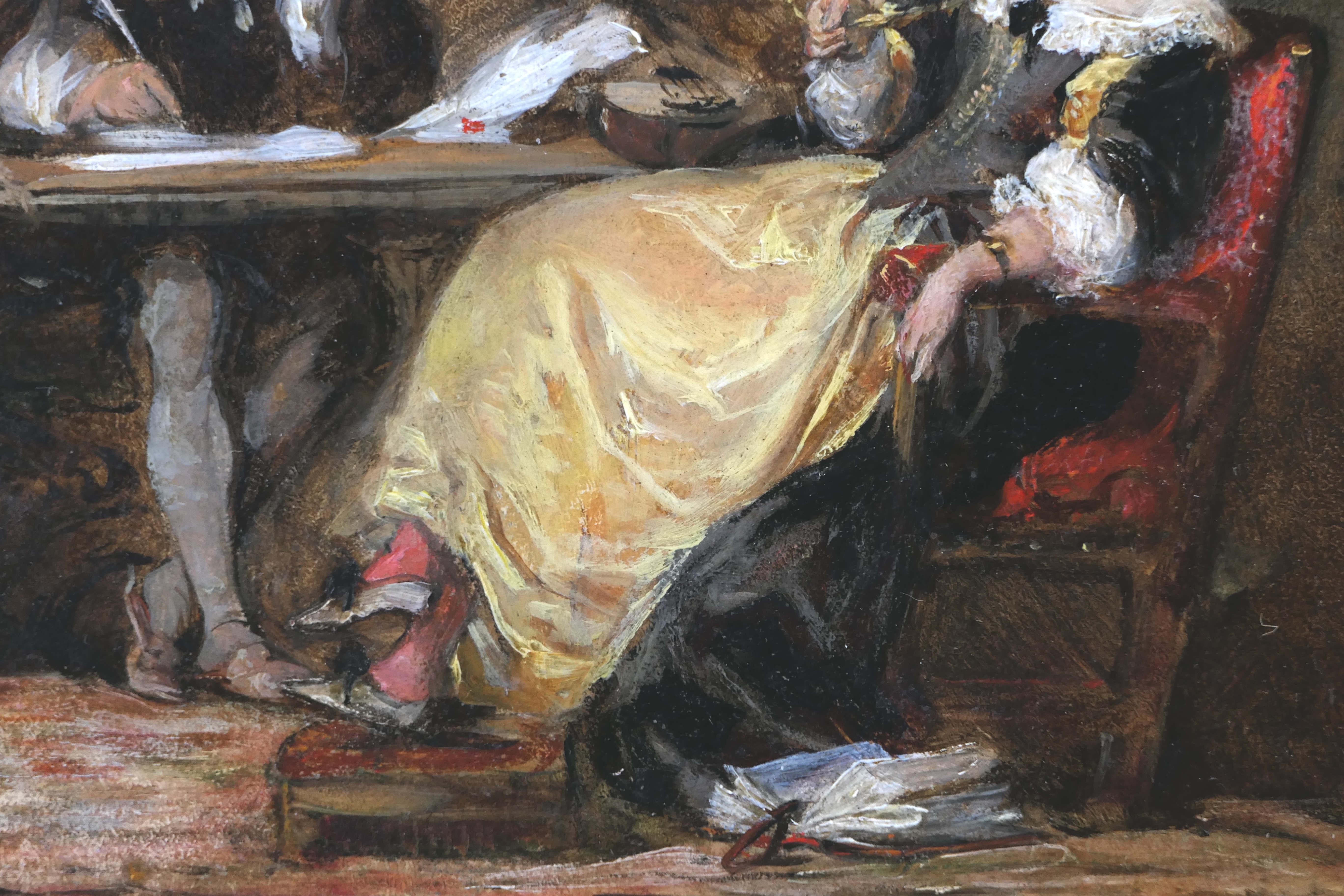
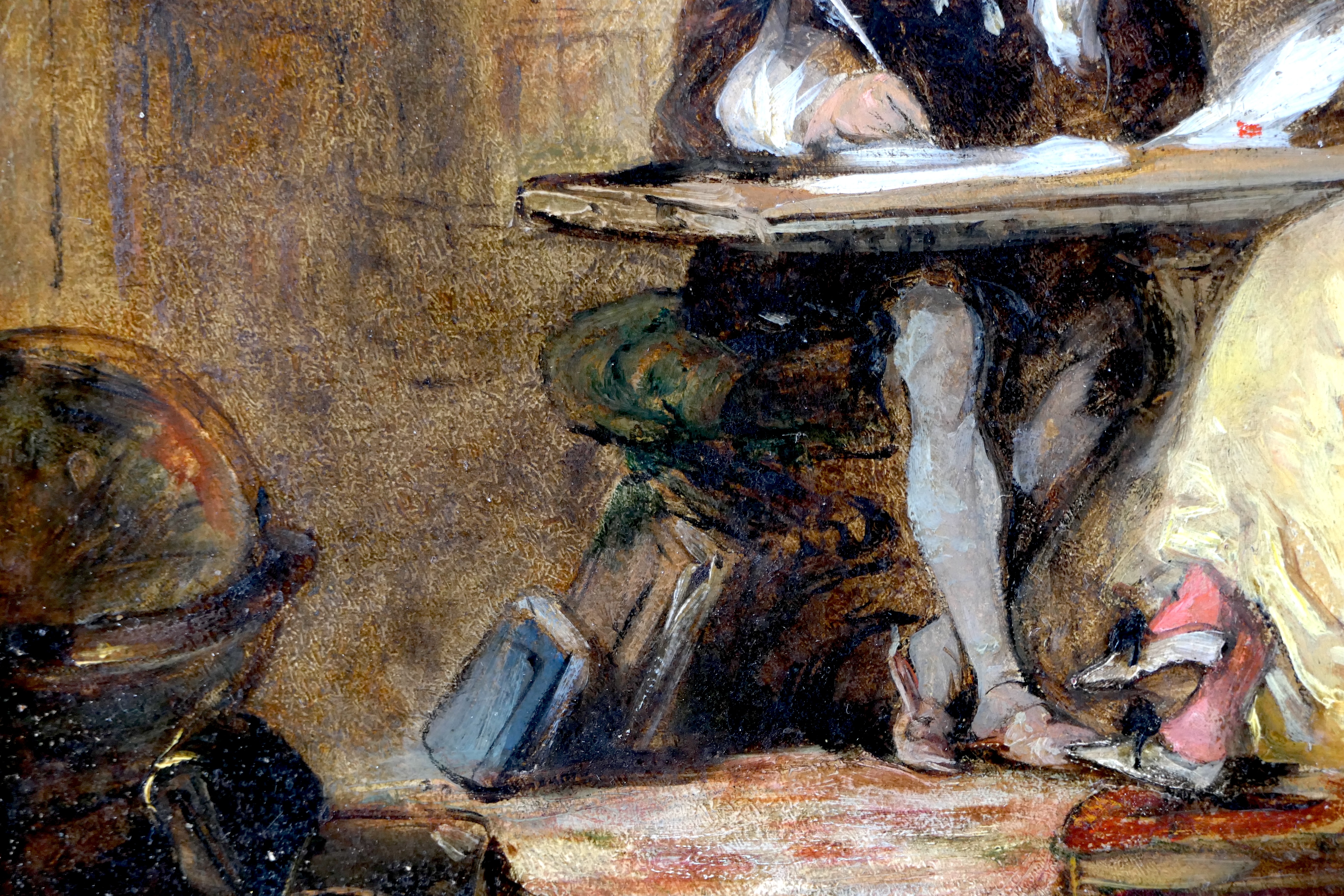
In the painting we see John writing at the family table, a library of books behind him and a globe, emblematic of his Grand Tour of 1638-9, and further books in the foreground. Opposite the poet lolls the unhappy Mary, in a beautifully painted yellow satin dress, lace collar and bands, and tightly curled hair, all reminiscent of Van Dyck's portraits of Henrietta Maria, Charles I's queen. Mary distractedly twirls the jewel at the end of her gold necklace, having discarded a lute on the table and a book on the floor. Her red stockings and crimson chair contrast with her husband's sober clothing and stool. While Milton's expression is calm and absorbed, his wife's is unhappy, and elsewhere.
The work is painted on a wooden veneer, attached to a wooden panel. There are small areas where the veneer has lifted slightly from the main panel, but these should not be a matter of any concern for the condition of the work. Ultraviolet inspection has revealed no areas of restoration or retouching.
Dimensions:
1853
Oils on wooden panel
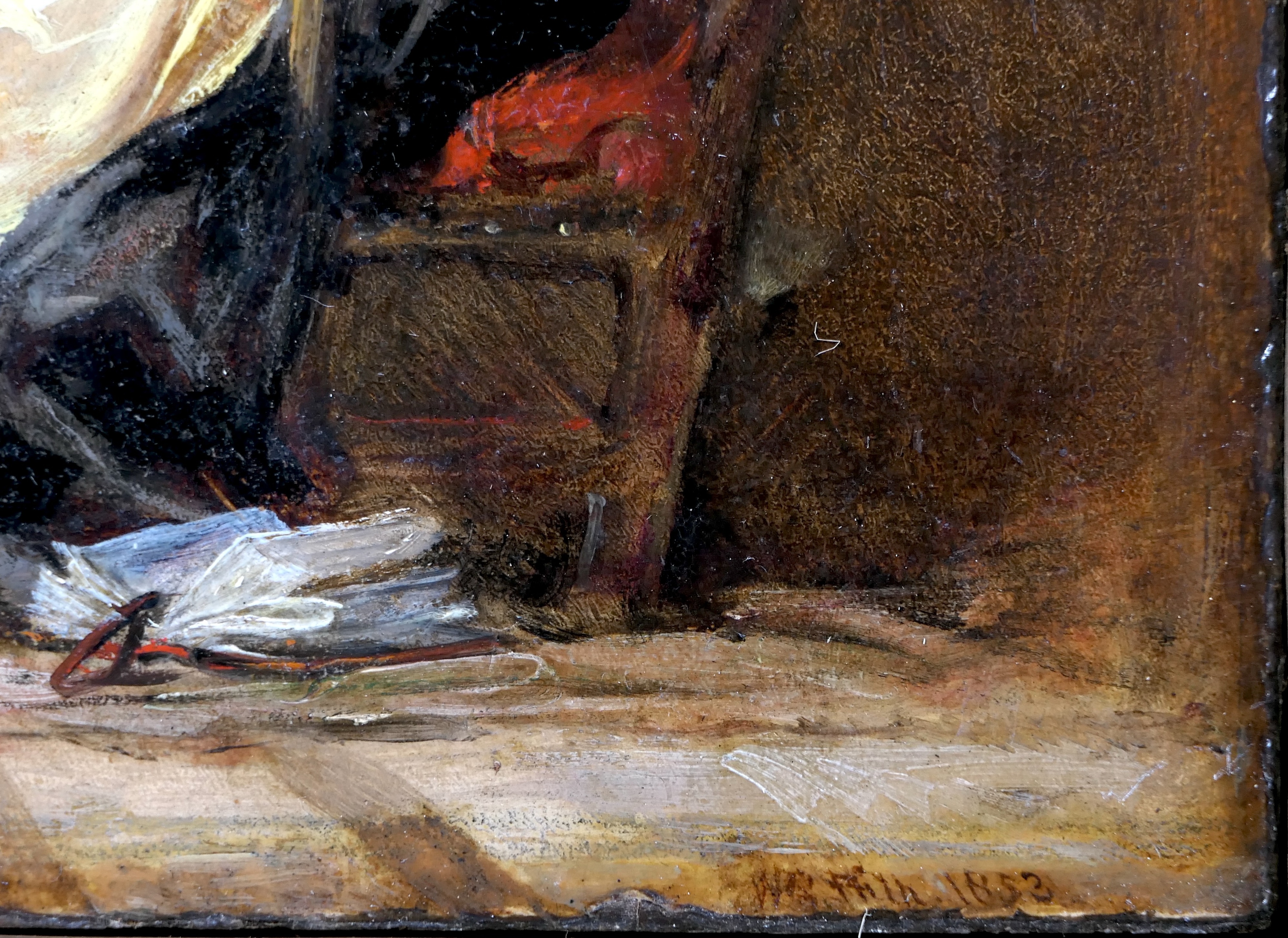
Signed and dated 1853. Letter on back of panel reads: "7, Pembridge Villas, Bayswater, W.", dated "Feb 26. 1898", reads "Dear Sir, The subject of the sketch is Milton & his first wife & is intended to represent the irritable disposition of the lady when she found herself matched to what she found an uncongenial bookworm. Faithfully Yours W. P Frith. S(?) H. Wonale(?) Esq."
S. (?) H. Wonale (?) 1898; Christie's stenciilled (?); Sotheby's 11/10/1967, lot 82; Sotheby's 14/07/1983.
RELATED ITEMS


 was not only once of the greatest British poets, author of 'Paradise Lost' and 'Paradise Regained', but also a civil servant, a republican and Secretary for Foreign Tongues to the Commonwealth Council of State under Oliver Cromwell. His views developed from extensive reading, travel and experience beginning as a student at Cambridge in the 1620s and continued through the English Civil War (1642-1651). In 1642 Milton married Mary Powell, 17 years his junior, and from a strong royalist family. Within weeks Mary had returned to live with her family in Oxfordshire. Although the reason for the split was not recorded, it was no doubt not unconnected with the outbreak of the Civil War. Milton sought a divorce, unsuccessfully, but his research into the subject led to a series of writings of polemic arguing for the legalisation of divorce. Despite his continued campaigning, John and Mary reunited in about 1645, and went on to have four children together, before Mary died in childbirth in 1652, aged 27, while her husband's blindness was setting in. Frith's painting thus portrays a complex, initially problematic and ultimately tragic marriage, but also touches on some of the major political, societal and religious issues of the mid-17th century. In the painting we see John writing at the family table, a library of books behind him and a globe, emblematic of his Grand Tour of 1638-9, and further books in the foreground. Opposite the poet lolls the unhappy Mary, in a beautifully painted yellow satin dress, lace collar and bands, and tightly curled hair, all reminiscent of Van Dyck's portraits of Henrietta Maria, Charles I's queen. Mary distractedly twirls the jewel at the end of her gold necklace, having discarded a lute on the table and a book on the floor. Her red stockings and crimson chair contrast with her husband's sober clothing and stool. While Milton's expression is calm and absorbed, his wife's is unhappy, and elsewhere.The work is painted on a wooden veneer, attached to a wooden panel. There are small areas where the veneer has lifted slightly from the main panel, but these should not be a matter of any concern for the condition of the work. Ultraviolet inspection has revealed no areas of restoration or retouching. )